Agencies get blamed for breaking client websites.
Even when they did not cause the problem.
Even when someone else made the change.
Even when the issue existed before they touched the site.
This is not about bad clients.
It is not about poor communication.
It is about structure.
Agencies get blamed for breaking client websites because website changes happen without clear boundaries, ownership, or isolation. Blame is a symptom of missing governance and unsafe editing surfaces.
Understanding why this happens is the first step to preventing it.
This article explains the structural reasons agencies become the default target. For the full system on safe editing, see editing client websites without developers.
"One of the most common misconceptions in digital marketing is assuming poor results automatically mean bad ads. In reality, many Meta or Google ad campaigns drive strong, high-quality traffic. When users consistently bounce or fail to convert, the issue is almost always the website or landing page experience. Unfortunately, ad experts are often the first to get blamed, even when the data clearly points elsewhere."
Why Agencies Are the Default Target

Agencies become the visible party when websites break.
They have central access.
They have perceived technical authority.
They lack visibility into other actors.
Clients equate vendor with owner.
This makes agencies the default target for blame.
Central access creates visibility
Agencies often have the most visible access to client websites.
They log in regularly.
They make changes frequently.
They are the ones clients see working on the site.
When something breaks, the agency is the obvious suspect.
Even if a client employee made the change.
Even if a third-party plugin updated automatically.
Even if the issue was pre-existing.
The agency is visible.
So the agency gets blamed.
Perceived technical authority
Clients assume agencies know how websites work.
They assume agencies understand the risks.
They assume agencies can prevent problems.
This assumption creates an expectation.
When problems occur, the assumption breaks.
The agency should have known.
The agency should have prevented it.
The agency should have caught it.
This is why agencies get blamed for breaking client websites.
Not because they are careless.
Because they are perceived as the technical authority.
Lack of visibility into other actors
Agencies cannot see what clients do.
They cannot see what freelancers do.
They cannot see what automated systems do.
They only see their own changes.
When something breaks, they cannot prove they did not cause it.
They cannot show who actually made the change.
They cannot demonstrate the timeline.
This lack of visibility makes agencies vulnerable to blame.
Clients equate vendor with owner
Many clients treat agencies as website owners.
They assume the agency controls everything.
They assume the agency is responsible for everything.
They do not distinguish between:
- Agency changes
- Client changes
- Third-party changes
- Automated changes
To the client, it is all "the website."
And the agency is "the website person."
So when the website breaks, the agency is responsible.
This is structural.
Not emotional.
What Actually Breaks Websites Most Often
Most website breakage comes from predictable patterns.
Shared pages edited by multiple people.
Campaign changes applied globally.
Undocumented edits.
Overlapping responsibilities.
Lack of rollback or change history.
These patterns create cascading failures.
Shared pages edited by multiple people
The homepage gets touched by:
- Campaign updates
- Product launches
- Brand refreshes
- Content updates
- Bug fixes
Each person makes changes independently.
No one coordinates.
No one knows what others changed.
Conflicts arise.
Breakage follows.
This is why why website changes break more often in client environments.
Shared surfaces amplify risk.
Campaign changes applied globally
Agencies update production pages for campaigns.
They change headlines.
They modify CTAs.
They add promotional banners.
Then the campaign ends.
Now they must undo everything.
Or they forget.
The production page stays broken.
This is why change website content for ads without breaking production requires isolated surfaces.
Global changes create regressions.
Undocumented edits
Many changes happen without documentation.
No one records what changed.
No one records when it changed.
No one records why it changed.
When something breaks, no one knows what to undo.
No one knows what to check.
No one knows what to verify.
This lack of documentation makes blame inevitable.
Overlapping responsibilities
Multiple people own the same pages.
The agency owns the marketing layer.
The client owns the brand layer.
A freelancer owns the content layer.
No one knows who owns what.
Changes happen without coordination.
Conflicts create breakage.
Blame follows.
Lack of rollback or change history
When changes break, teams need to undo them.
But many systems lack rollback.
Or rollback is difficult.
Or change history is missing.
Teams cannot see what changed.
They cannot revert safely.
They cannot prove what happened.
This makes blame unavoidable.
The Role of Invisible Changes

Content edits feel safe.
They seem harmless.
They appear isolated.
But they can have cascading effects.
And they are often untracked or unreviewed.
Invisible changes create visible blame.
Why content edits feel safe
Changing a headline feels low-risk.
Updating copy seems harmless.
Modifying a CTA appears isolated.
These edits do not touch code.
They do not modify structure.
They do not change functionality.
So teams make them without preview.
Without testing.
Without documentation.
How invisible changes compound
Small edits compound into big problems.
A headline change breaks mobile layout.
A copy update breaks tracking.
A CTA modification breaks form submission.
Each change seems isolated.
But they interact.
They compound.
They create cascading failures.
Why untracked changes create blame
When changes are untracked, no one knows what happened.
A client reports a broken page.
The agency checks recent changes.
But the change history is empty.
Or incomplete.
Or unclear.
The agency cannot prove they did not cause it.
They cannot show what actually changed.
They cannot demonstrate innocence.
So they get blamed.
This is how invisible changes create visible blame.
Why Blame Appears After the Fact

Blame only shows up after something goes wrong.
Not before.
Not during.
After.
This timing is not accidental.
It is structural.
No pre-defined change boundaries
Most teams lack clear boundaries.
They do not define what can be changed.
They do not define what cannot be changed.
They do not define who can change what.
Changes happen without rules.
Without limits.
Without guardrails.
When something breaks, boundaries are unclear.
So blame is unclear.
No shared understanding of risk
Teams do not discuss risk before changes.
They do not identify potential problems.
They do not plan for failures.
They just make changes.
Then something breaks.
Now they must explain why.
But they never discussed the risks.
So they cannot explain.
They can only blame.
No audit trail
Many changes happen without records.
No one documents what changed.
No one documents when it changed.
No one documents who changed it.
When something breaks, there is no trail.
No proof.
No evidence.
Blame becomes the default explanation.
No concept of isolated surfaces
Most teams edit production directly.
They do not use isolated surfaces.
They do not test changes separately.
They do not preview before publishing.
Changes go live immediately.
If something breaks, it breaks in production.
There is no isolation.
No safety net.
No way to prevent blame.
This is where governance thinking matters.
Clear boundaries.
Shared risk understanding.
Complete audit trails.
Isolated surfaces.
These prevent blame by preventing problems.
How Agencies Prevent Being Blamed (Without Being Defensive)

Prevention is better than defense.
Clear change boundaries prevent conflicts.
Isolated surfaces prevent regressions.
Documented ownership prevents confusion.
Predictable workflows prevent surprises.
These systems prevent blame by preventing problems.
Clear change boundaries
Define what can be changed.
Define what cannot be changed.
Define who can change what.
Document these boundaries.
Share them with clients.
Enforce them consistently.
When boundaries are clear, blame is clear.
If a change breaks something outside the boundary, the agency is not responsible.
If a change breaks something inside the boundary, the agency owns it.
This clarity prevents blame.
Isolated surfaces for experiments and campaigns
Use isolated surfaces for campaign changes.
Test changes separately.
Preview before publishing.
Roll back if needed.
This prevents campaign changes from breaking production.
It also prevents blame.
If a campaign change breaks, it breaks in isolation.
Not in production.
The agency can fix it without affecting the main site.
This is why safely edit live client websites requires preview and isolation.
Documented ownership
Record who owns what.
Record who made which changes.
Record when changes happened.
Record why changes were made.
This documentation creates an audit trail.
When something breaks, the trail shows what happened.
It shows who is responsible.
It shows what can be fixed.
This prevents blame by providing proof.
Predictable workflows
Use the same workflow for every change.
Preview first.
Test thoroughly.
Document completely.
Publish carefully.
Verify immediately.
This predictability prevents surprises.
It also prevents blame.
When workflows are predictable, problems are predictable.
Teams can prevent them.
They can catch them early.
They can fix them quickly.
This is how prevent breaking client websites becomes routine.
Systems that do not fail silently
Design systems that surface problems early.
Use preview to catch issues before publishing.
Use testing to verify changes work.
Use monitoring to detect problems quickly.
Use rollback to fix problems fast.
When systems surface problems early, blame is unnecessary.
Teams fix issues before clients notice.
They prevent problems before they become blame.
This is the goal.
Not avoiding blame.
Preventing problems.
Getting Started
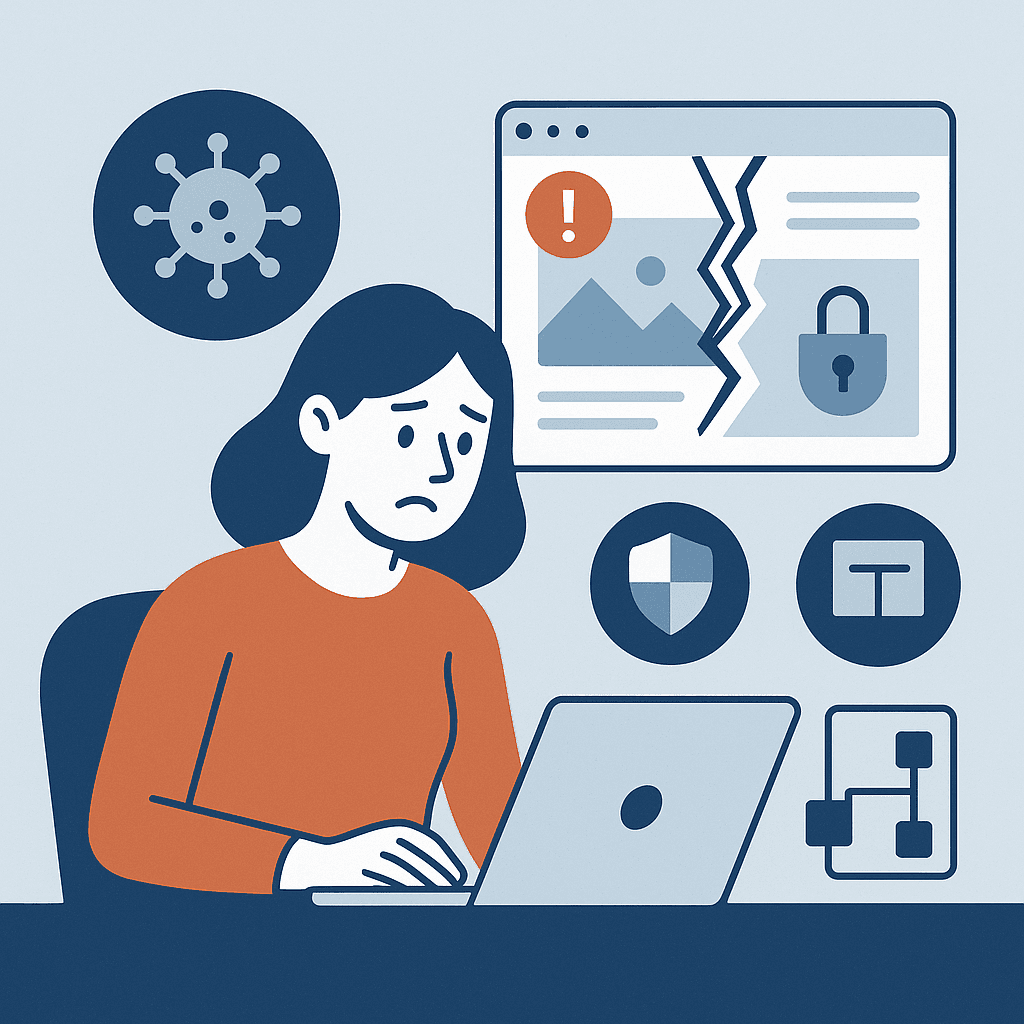
Blame is a symptom.
The disease is missing governance.
The cure is clear boundaries, isolated surfaces, documented ownership, and predictable workflows.
These systems prevent problems.
They also prevent blame.
But they require structure.
They require discipline.
They require commitment.
Start with one system.
Then add another.
Then another.
Build the structure that prevents blame by preventing problems.
Prevent Blame Through Systems
- Define change boundaries: Document what can be changed, what cannot, and who can change what. Share these boundaries with clients.
- Use isolated surfaces: Test campaign changes separately. Preview before publishing. Roll back if needed.
- Document ownership: Record who owns what, who made changes, when changes happened, and why they were made.
- Establish predictable workflows: Use the same workflow for every change. Preview, test, document, publish, verify.
- Surface problems early: Use preview, testing, and monitoring to catch issues before clients notice.
If you want to learn more about building these systems, see website change management for agencies and agency website editing permissions.