If you govern multiple client websites, you’ve felt this:
You’re not slow because the work is hard.
You’re slow because every client has different rules.
Different approvers.
Different boundaries.
Different definitions of “done.”
So your team keeps context-switching.
Then changes stall.
Then performance work gets stuck behind website decisions.
This is a scaling problem inside:
client website governance for agencies
Why Multi-Client Governance Breaks Down

Multi-client governance breaks down when “every client is different” becomes a default excuse.
Yes, clients are different.
But not everything should be different.
When everything varies, you get:
- Onboarding friction
- Slower approvals
- More rework
- More mistakes under pressure
Your team spends time remembering rules instead of shipping changes.
What Should Be Standardized Across Clients

Standardize the parts that keep your system stable.
These elements should look almost identical across accounts:
- Required intake fields
- Risk tiers (low/medium/high)
- What counts as approval
- Common change categories
- Minimum standards (quality floor)
If you need the intake model:
Intake Website Change Requests Without Chaos
If you need the approval tier model:
Lightweight Approval Workflows for Website Changes
If you need the minimum standards set:
Website Standards for Agencies: Stop Rewriting Pages
And if you need the decision-rights map:
Who Decides What on a Client Website? For Agencies
What Should Stay Client-Specific

Some things should vary.
Keep these client-specific:
- Brand voice and tone constraints
- Legal sign-off roles
- Claim rules (what they can and can’t say)
- Business constraints (lead times, product rules, pricing rules)
This is the split that keeps you sane:
Standardize the system.
Customize the business constraints.
A Repeatable Governance Onboarding Flow
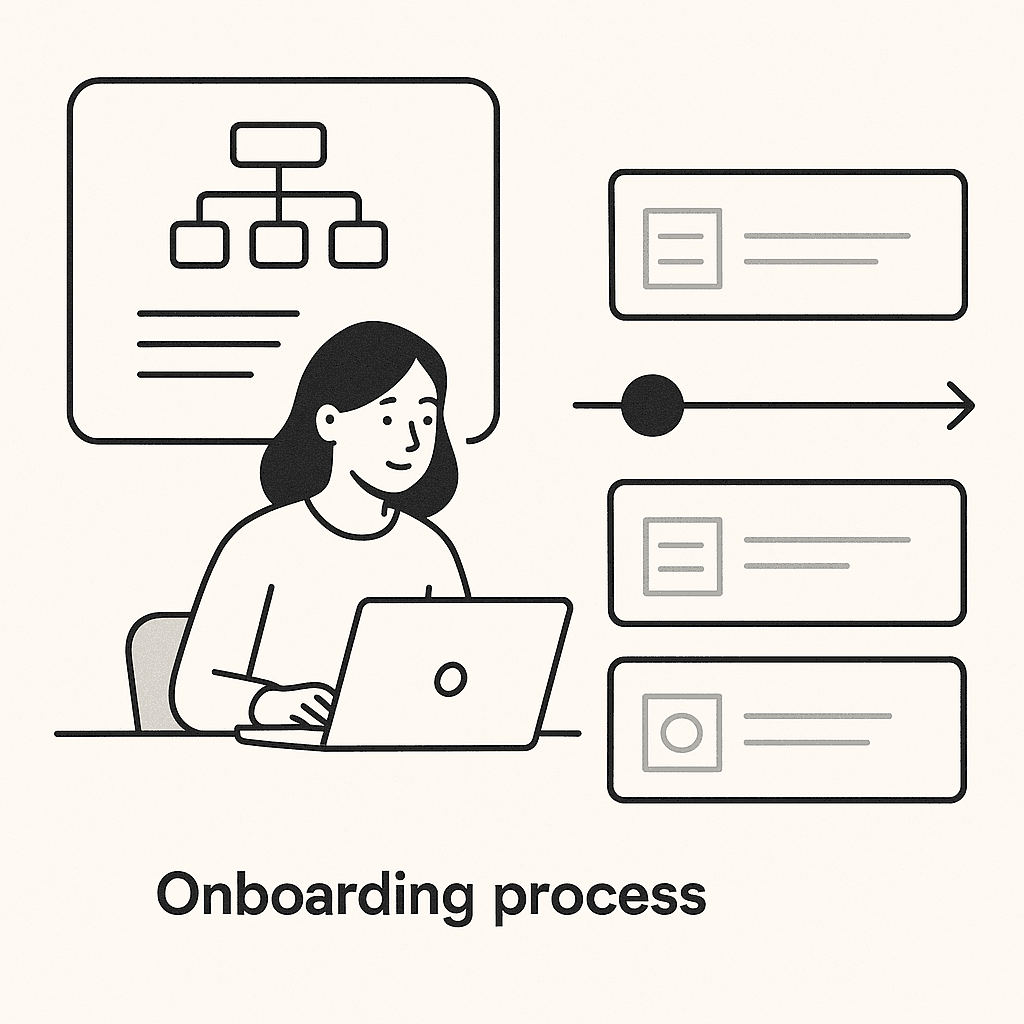
Onboarding is where governance either becomes real or stays theoretical.
Here’s a repeatable flow that works across accounts.
Week one: lock the governance basics
If you’re short on time, treat week one as “baseline governance only.”
You’re not building perfection.
You’re building consistency.
How to Prevent Drift (So Governance Stays Real)

Drift is when exceptions pile up.
Then the system becomes optional.
Then chaos returns.
Prevent drift with a cadence:
- Review exceptions weekly for one month
- Turn repeated exceptions into rules
- Delete rules nobody uses
Governance should feel like relief.
Not paperwork.
For an external baseline on change control:
U.S. government guide on configuration and change control
And for reducing user-facing errors that turn into rework:
NIST guidance on usable security and reducing errors
Getting Started: Standardize Governance in One Sprint
Don’t start with all clients.
Start with 3–5.
That’s enough to see patterns without overwhelming the team.
Standardize governance in one sprint
- Pick 3–5 clients: Choose the ones where work stalls most often.
- Standardize intake: One intake template and required fields across those accounts.
- Standardize approval tiers: Low/medium/high risk with explicit sign-off rules.
- Standardize minimum standards: One-page quality floor the team can reuse.
- Standardize decision categories: Use the same change-type categories across accounts.
- Review exceptions weekly: Turn repeated exceptions into rules, and keep the system lightweight.