
You've done the targeting work. The audience is right. The clicks are coming from qualified people who genuinely need what you're offering. And yet nothing. They land, they read, they scroll, and then they leave without doing anything.
This is intent mismatch, and it's one of the most common reasons websites get traffic but no leads. The audience isn't wrong. The page is answering a different question than the one they came to ask.
Most teams never diagnose this because the symptoms look like something else. Bounce rates climb and the assumption is bad traffic. Engagement is high but conversions are low, so the assumption is weak copy. But the real issue is structural: the visitor's intent doesn't match the page's role.
The Symptom: People Land, Read, and Leave

When intent mismatch is the problem, you see a pattern that looks almost encouraging at first. People stay on the page. They scroll. They might even click around. But they don't take the action you're asking for.
This happens because the visitor is trying to make one decision, and the page is trying to help them make a different one. The traffic is "good" by every targeting metric, but the experience is a mismatch. The page treats them as further along than they actually are, so the ask feels premature or irrelevant.
What "Intent" Actually Means on a Website

Intent isn't about demographics or interest level. It's about what the visitor is trying to decide next.
Someone searching "how to improve landing page conversions" is trying to understand a problem. Someone searching "landing page optimization tools" is comparing options. Someone searching your brand name plus "pricing" is ready to evaluate a purchase. These are different decisions, and they need different pages.
Decision Stage Is Not the Same as Interest
A visitor can be highly interested and still not ready to act. They might want what you're selling, but they're still in learning mode. If the page jumps straight to "book a demo" or "get started," you're asking them to commit before they've finished deciding.
This is where most intent mismatch happens. The page assumes purchase intent when the visitor is still in research mode. The ask is too big for the moment, so they leave, not because they're uninterested, but because the page didn't help them with what they actually came to do.
How Intent Mismatch Shows Up (Common Failure Patterns)

Intent mismatch takes predictable forms. Once you recognize the patterns, you'll see them everywhere.
The "Education Traffic" Sales Page
Someone clicks an ad about a problem they're trying to understand. They land on a page that immediately asks them to buy. The gap between where they are and what you're asking is too wide. They bounce, not because the offer is bad, but because they weren't ready for an offer at all.
This is the most common failure in paid traffic. The ad promised to explain something. The page tried to sell something. That mismatch creates fast exits that look like bad traffic but are actually bad routing.
The "Comparison Traffic" Empty Page
A visitor arrives ready to compare options. They've done their research and know what they want. They just need help choosing. But your page doesn't help them compare. It just pitches. No differentiation, no honest trade-offs, no help with the decision they're actually trying to make.
These visitors stall because the page isn't useful for their stage. They leave to find a comparison elsewhere, and often they don't come back.
The "Retargeting Reset" Problem
A visitor comes back after their first visit. They've already seen the intro and learned the basics. But your retargeting sends them back to the same cold page, forcing them to start over.
Returning visitors have different intent than first-timers. They're further along in their decision. When you treat them like strangers, you waste the momentum they built on their first visit. This is especially common when retargeting campaigns point to generic pages instead of adapting content by funnel stage.
Page Roles: The Missing Layer Most Teams Don't Name

Every page has a job. The problem is that most teams never explicitly define what that job is, so the page tries to do everything at once.
There are really only four roles a page can play:
- Educate: Help the visitor understand a problem or concept
- Compare: Help the visitor weigh options and make a choice
- Prove: Provide evidence that builds confidence
- Capture: Ask for a commitment (lead, purchase, signup)
A page that tries to do all four usually does none of them well. The fix isn't more content. It's picking one role and doing it clearly. When the page's job is defined, you can match it to the intent that's arriving.
Fixing Intent Mismatch Without a Redesign

You don't need to rebuild everything. You need to match traffic sources to page roles more deliberately.
Start by identifying the intent behind your highest-traffic sources. What decision is that visitor trying to make? Then ask whether the page you're sending them to actually helps with that decision.
If the intent is educational, the page should teach, not sell. If the intent is comparison, the page should differentiate, not pitch. If the intent is decision-ready, the page should prove and capture, not force them to re-learn basics.
The proof you provide should match the stage too. Early visitors need clarity and relevance. Later visitors need evidence and confidence. A generic wall of testimonials doesn't help if the visitor isn't sure yet whether this is even for them.
Getting Started: Match One Traffic Source to One Page Role
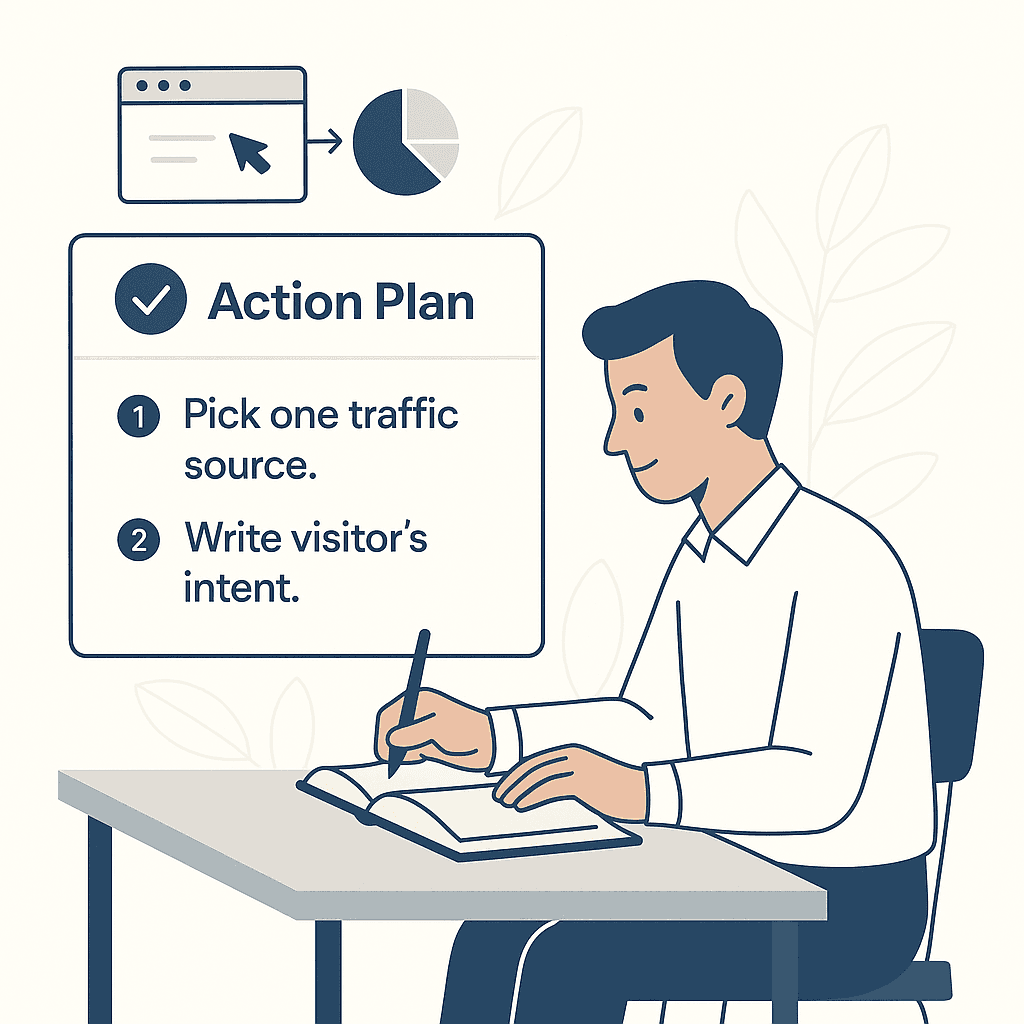
Fix intent mismatch on one campaign
- Pick one traffic source. The campaign or ad group with the most volume right now.
- Write the visitor's intent in one sentence. What decision are they trying to make when they click?
- Identify the current page role. Is it educating, comparing, proving, or capturing?
- Check for mismatch. Is the page's role aligned with the visitor's intent?
- Adjust the page or the routing. Either change what the page does, or send that traffic to a better-matched page.
- Reduce the ask if needed. If the intent is early-stage, swap the CTA for a smaller next step.