Your website visitors aren't all the same. Some are just discovering your brand. They need education. Others are comparing options. They need detailed information. Some are ready to buy. They just need a clear path to conversion.
Yet most websites show the same content to everyone. They don't consider where visitors are in the buying funnel. This one-size-fits-all approach leaves conversion opportunities on the table.
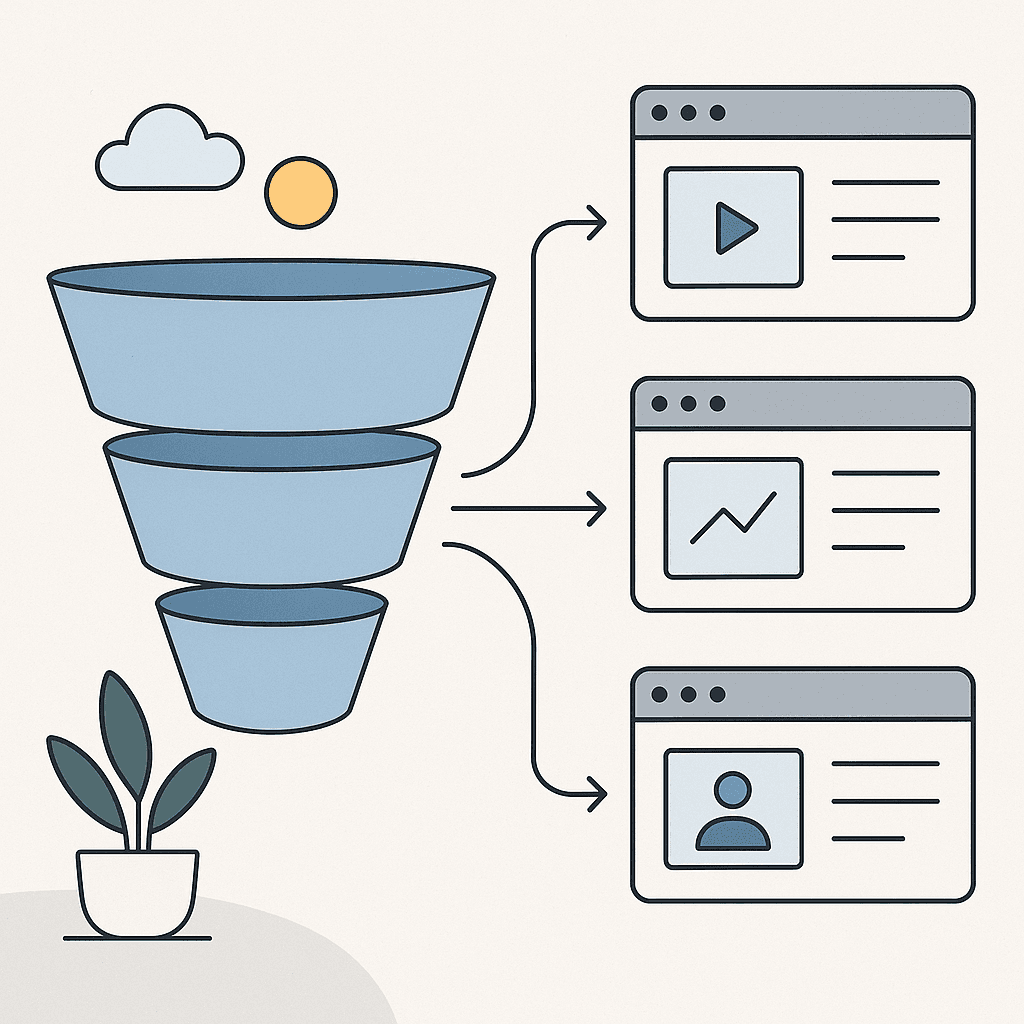
Funnel-based personalization adapts your website content to match each visitor's buying stage. It guides them from awareness to purchase. It shows the right messaging at the right time.
This guide explains how to adapt website content through the buying funnel. You'll learn how to identify buying stages. We'll show you how to create personalized experiences for each stage. If you're trying to diagnose why traffic isn't converting, start with the broader framework: why websites get traffic but no leads.
Understanding the Buying Funnel
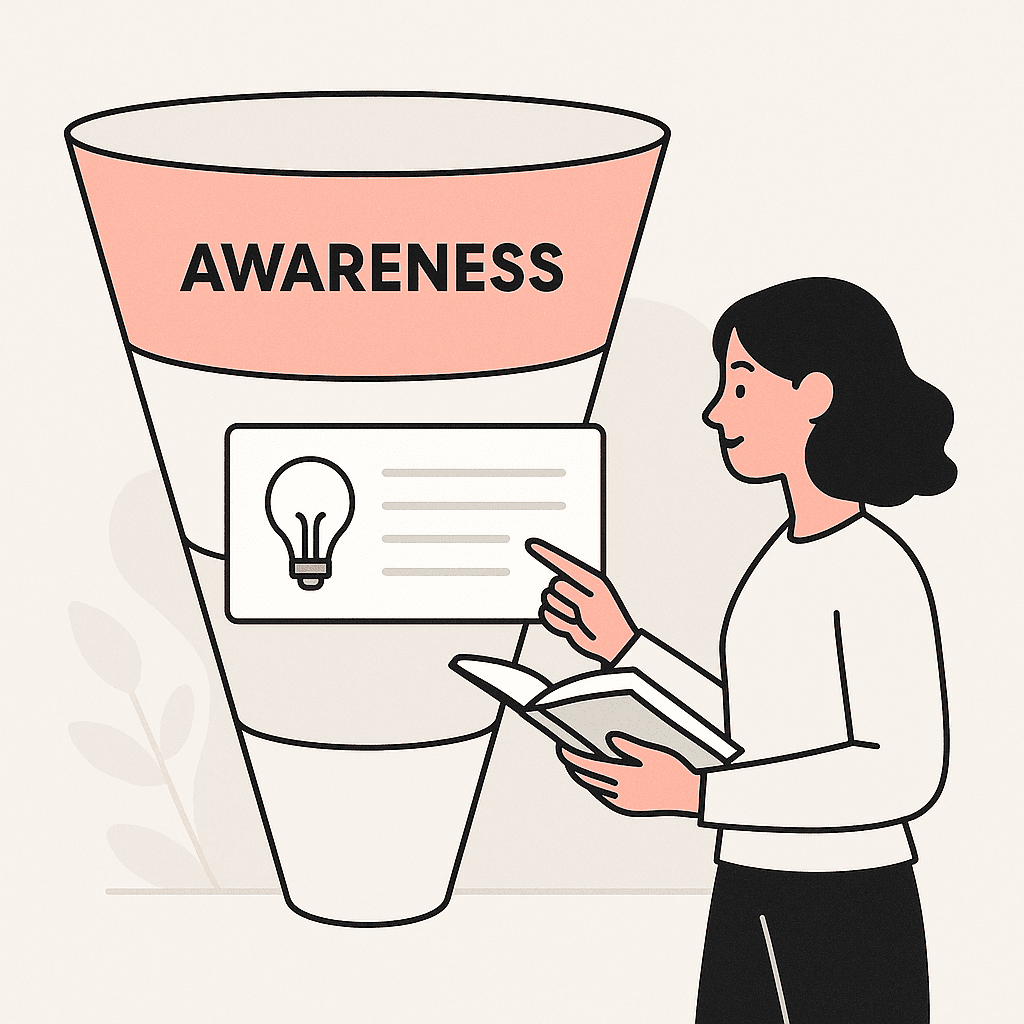
The buying funnel has three main stages:
Top-of-Funnel (TOFU) - Awareness
Visitors are discovering your brand. They're learning about the problem you solve. They need:
- Education: Help them understand the problem and potential solutions.
- Trust building: Showcase your expertise and credibility.
- Low commitment: Offer valuable content without asking for much.
- Brand awareness: Help them remember you.
Middle-of-Funnel (MOFU) - Consideration
Visitors are evaluating solutions. They're comparing options. They need:
- Comparison: Help them evaluate you vs. competitors.
- Social proof: Show how others have succeeded with your solution.
- Detailed information: Provide specifics about your product or service.
- Engagement: Keep them interested and moving forward.
Bottom-of-Funnel (BOF) - Decision
Visitors are ready to buy. They need to take action. They need:
- Urgency: Create reasons to act now.
- Clear value: Emphasize benefits and ROI.
- Easy conversion: Remove friction from the purchase process.
- Risk reduction: Address concerns and offer guarantees.
The Problem with Static Funnel Content
Most websites treat all visitors the same. They show the same content regardless of buying stage. This creates several problems:
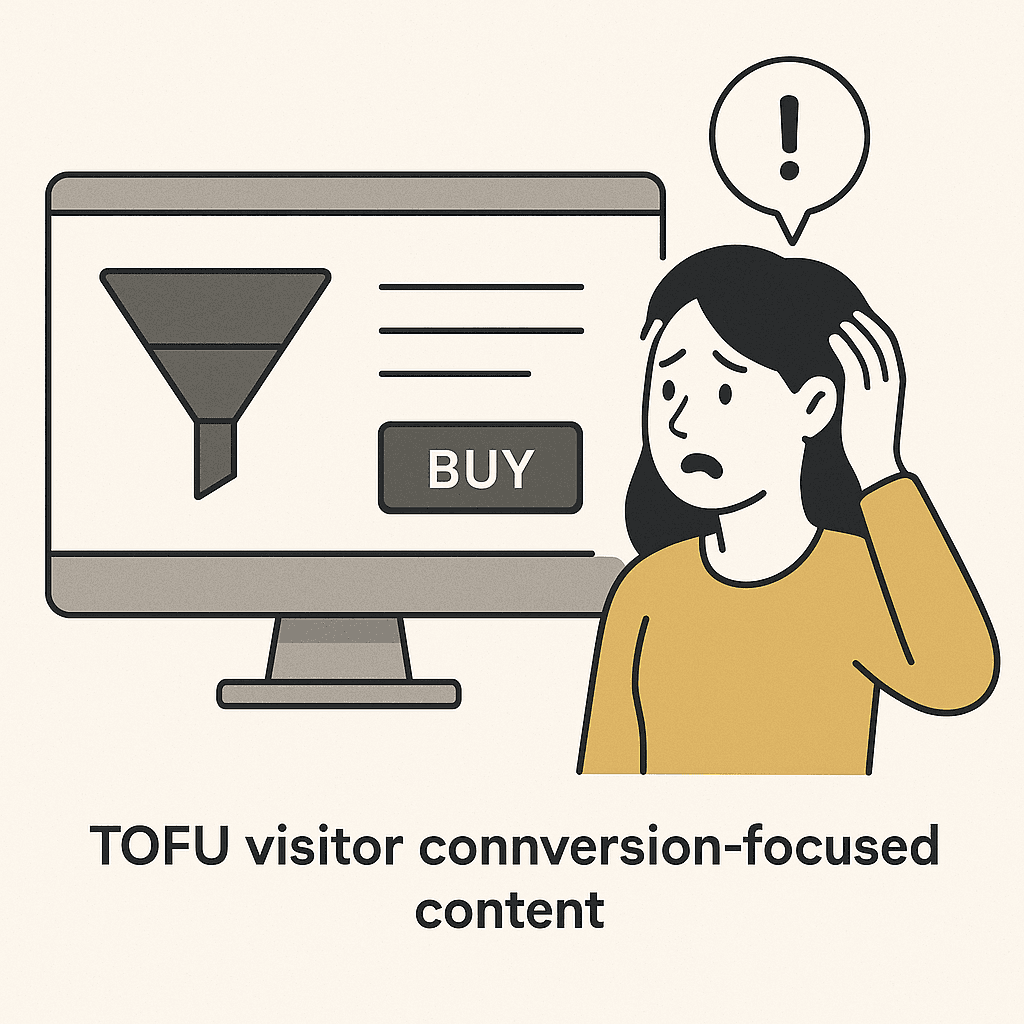
TOFU Visitors See Conversion-Focused Content
The problem: When awareness-stage visitors land on a page full of "Buy Now" CTAs and pricing, they're overwhelmed. They're not ready to buy. So they leave. You've lost them before they even understand your solution.
BOF Visitors See Educational Content
The problem: When decision-stage visitors land on educational blog posts and resource pages, they can't find the purchase path. They're ready to buy, but they can't figure out how. Frustration leads to abandonment.
No Progression Path
Visitors who return to your site see the same content again. There's no recognition of their previous interactions. There's no recognition of their progress through the funnel.
What's missing:
- No acknowledgment of previous visits
- No progression tracking
- No adaptation to buying stage
- No personalized journey
How Funnel-Based Personalization Works
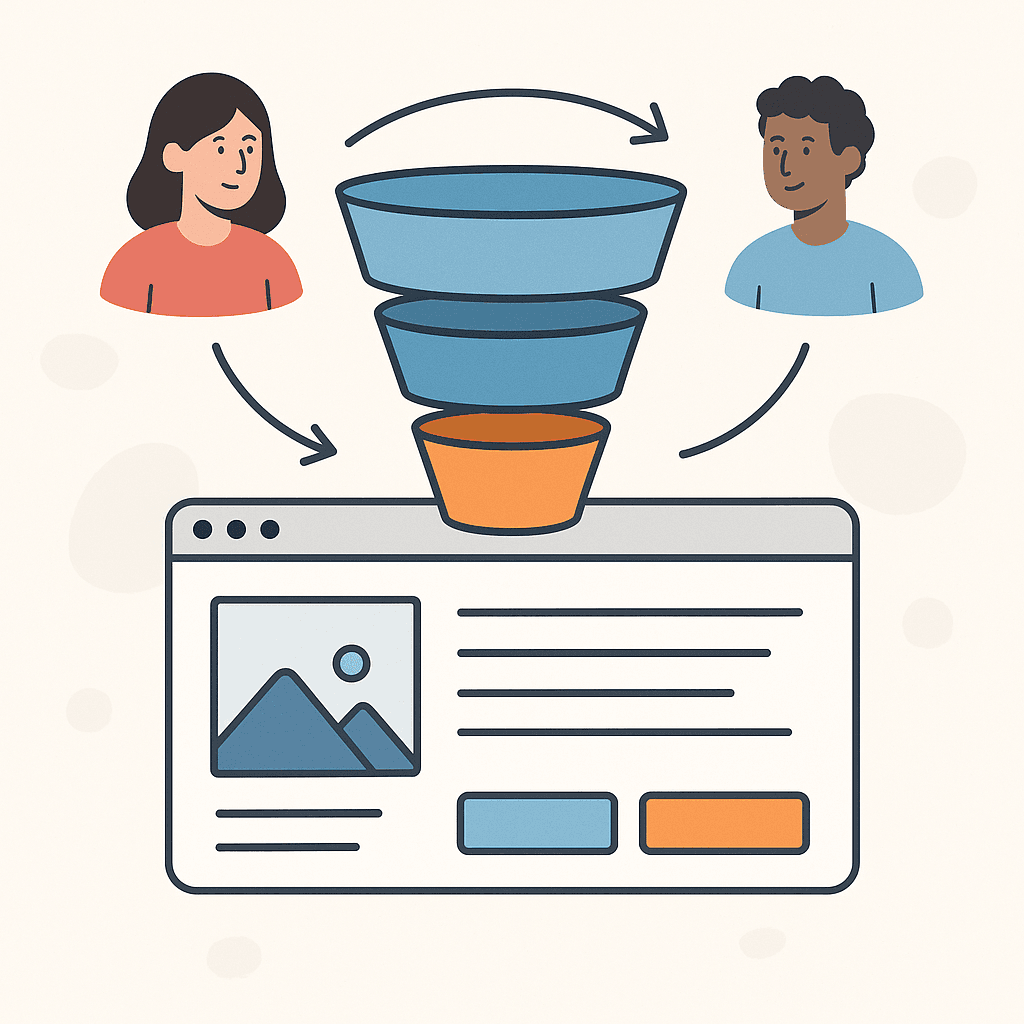
Funnel-based personalization adapts your website content. It adapts based on where visitors are in their buying journey. This is part of adaptive personalization strategies.
How it works:
This creates a dynamic experience. It guides visitors naturally from awareness to purchase. Importantly, you can implement this without developers using no-code website editing tools.
Identifying Visitor Buying Stage
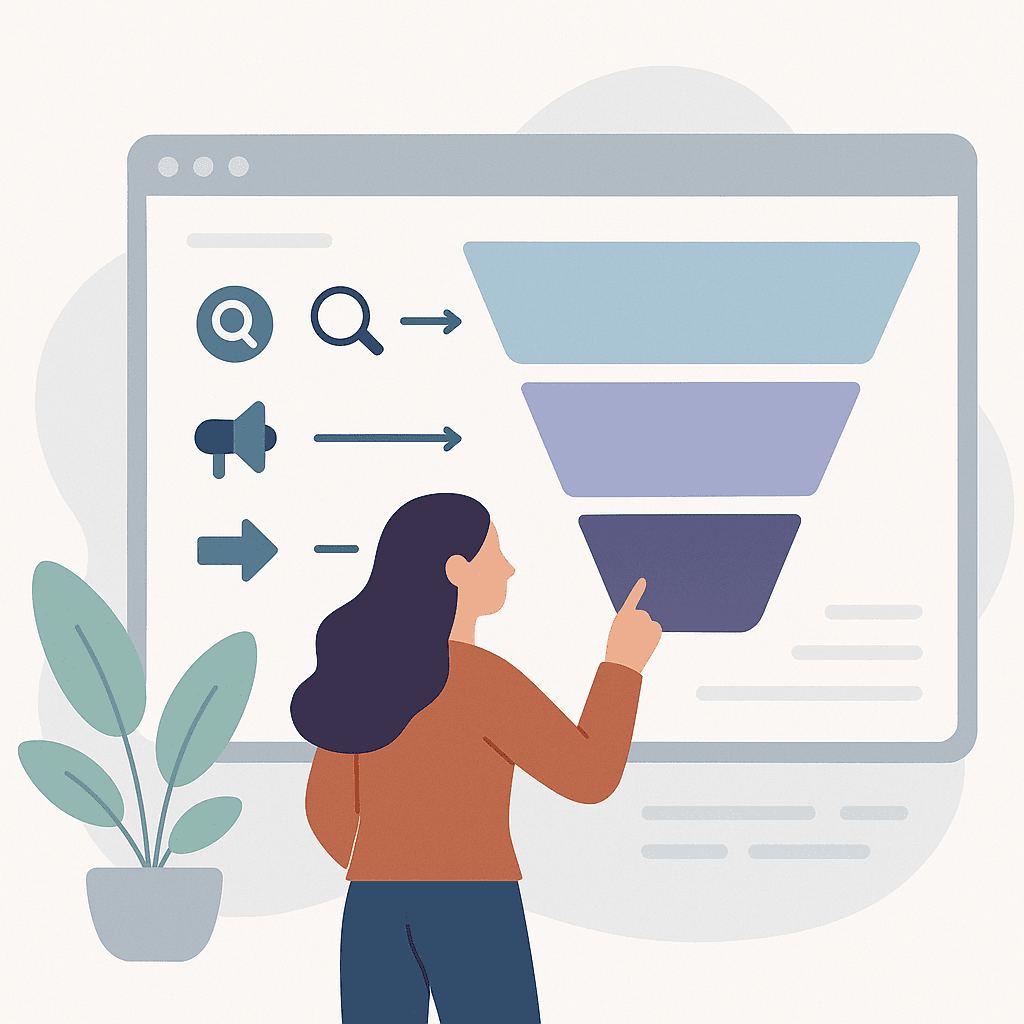
You can identify buying stage through several signals:
Traffic Source
| Source | Typical Stage | Why |
|---|---|---|
| SEO/Organic | TOFU | Researching and learning |
| Paid Search | MOFU or BOF | Actively searching for solutions |
| Direct | Any stage | Depends on previous interactions |
| Social Media | TOFU | Discovering your brand |
| MOFU or BOF | Already engaged with your brand |
Behavior Signals
| Signal | Indicates | Stage |
|---|---|---|
| First-time visitor | Just discovering | TOFU |
| Returning visitor | Already engaged | MOFU or BOF |
| Pages viewed | Educational content | TOFU |
| Pages viewed | Product pages | MOFU |
| Pages viewed | Pricing pages | BOF |
| Time on site | Longer engagement | MOFU or BOF |
| Form submissions | Downloading content | TOFU |
| Form submissions | Requesting demo | BOF |
Engagement Level
- High engagement: Viewing multiple pages, spending time = MOFU or BOF.
- Low engagement: Quick bounce = TOFU or wrong audience.
TOFU Content Strategy

For top-of-funnel visitors, focus on education and trust:
Content Types
| Content Type | Purpose |
|---|---|
| Educational blog posts | Help them understand the problem |
| Resource libraries | Guides, templates, tools |
| Case studies | Show how others have solved similar problems |
| Webinars and videos | Educational content in various formats |
Messaging Focus
- Problem awareness: Help them recognize they have a problem.
- Solution education: Introduce potential solutions (not just yours).
- Expertise demonstration: Show you understand their challenges.
- Value without commitment: Offer helpful content freely.
CTAs
- Soft CTAs: "Download Guide," "Learn More," "Read Case Study."
- No pressure: Focus on providing value, not immediate conversion.
Example TOFU Experience
A visitor from an SEO search for "project management challenges" sees:
Content shown:
- Educational content about common project management problems
- A downloadable guide: "10 Project Management Mistakes to Avoid"
- Case studies showing how teams have overcome challenges
- Soft CTA: "Download Free Guide" (not "Start Free Trial")
Why this works: The visitor is researching, not buying. Educational content builds trust. A soft CTA doesn't pressure them. They can learn without commitment.
MOFU Content Strategy
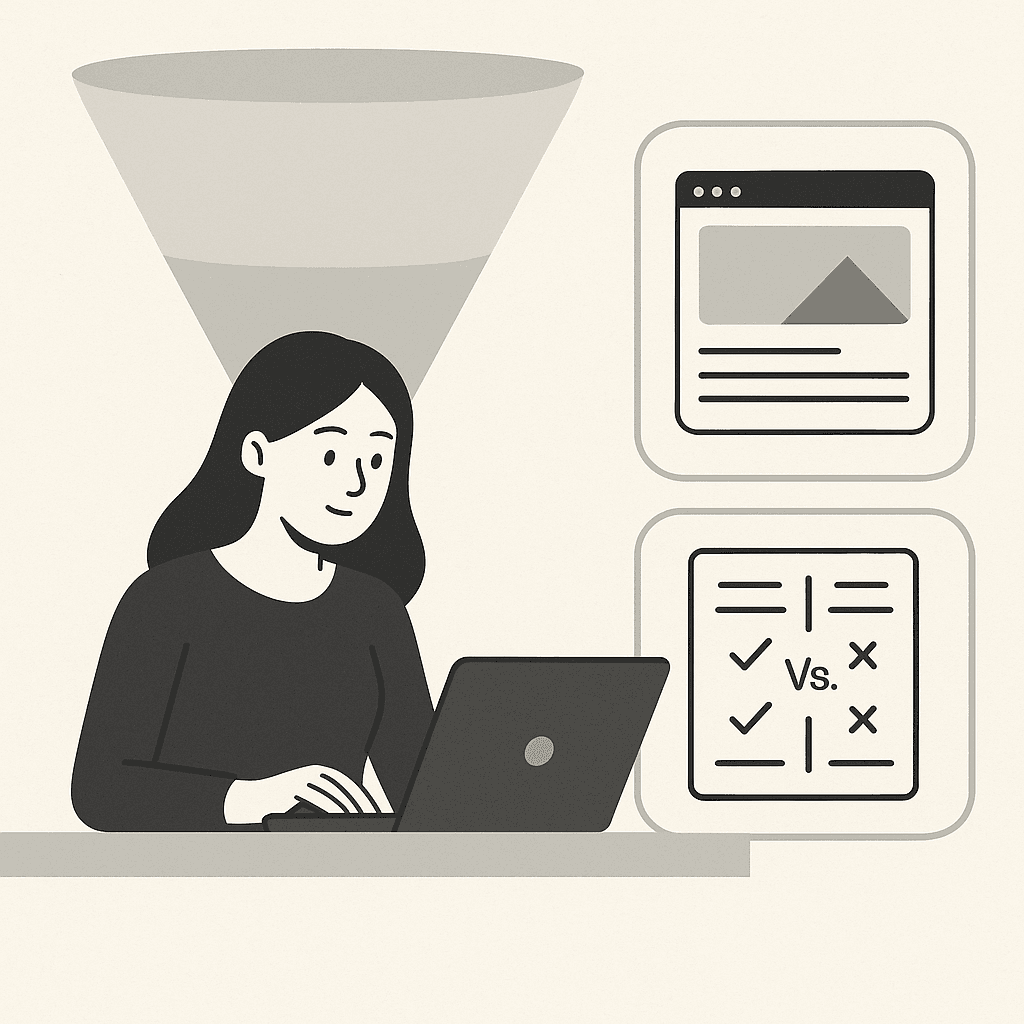
For middle-of-funnel visitors, focus on comparison and evaluation:
Content Types
| Content Type | Purpose |
|---|---|
| Product/service pages | Detailed information about your solution |
| Comparison content | You vs. competitors, different options |
| Social proof | Testimonials, reviews, customer stories |
| Interactive tools | Calculators, assessments, demos |
Messaging Focus
- Solution specifics: Detailed information about your offering.
- Differentiation: What makes you different and better.
- Social proof: How others have succeeded with you.
- Risk reduction: Address common concerns and objections.
CTAs
- Medium commitment: "Request Demo," "See Pricing," "Compare Plans."
- Information gathering: Help them evaluate while capturing their interest.
Example MOFU Experience
A returning visitor who downloaded your guide now sees:
Content shown:
- Product pages with detailed features and benefits
- Comparison table: "Us vs. Competitors"
- Customer testimonials and case studies
- Medium CTA: "See How We Compare" or "Request Demo"
Why this works: They've shown interest (downloaded guide). Now they're evaluating. Comparison content helps them make decisions. Medium CTAs capture interest without being pushy.
BOF Content Strategy
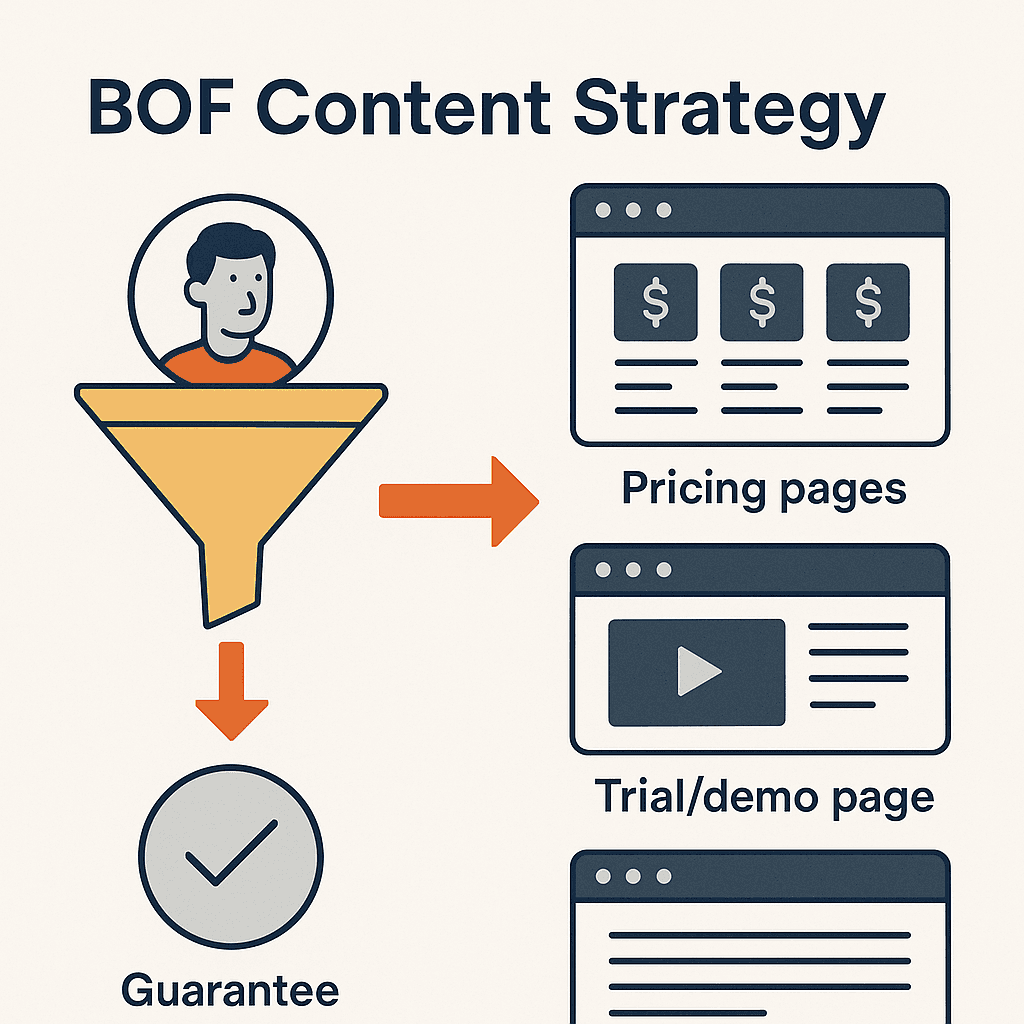
For bottom-of-funnel visitors, focus on conversion and urgency:
Content Types
| Content Type | Purpose |
|---|---|
| Pricing pages | Clear pricing and plan comparisons |
| Trial/demo pages | Easy paths to try your solution |
| Guarantee pages | Risk reduction and trust signals |
| Checkout pages | Streamlined conversion paths |
Messaging Focus
- Clear value proposition: What they get and why it matters.
- Urgency: Reasons to act now (limited offers, deadlines).
- Risk reduction: Guarantees, money-back offers, security.
- Easy next steps: Clear path to purchase or signup.
CTAs
- Strong CTAs: "Start Free Trial," "Buy Now," "Get Started."
- Conversion-focused: Direct paths to purchase or signup.
Example BOF Experience
A visitor who's viewed product pages and pricing now sees:
Content shown:
- Prominent pricing with clear value
- Limited-time offer or special discount
- Strong social proof (reviews, testimonials)
- Risk reduction (money-back guarantee, security badges)
- Strong CTA: "Start Free Trial - No Credit Card Required"
Why this works: They're ready to buy. Pricing is clear. Urgency creates action. Risk reduction removes barriers. Strong CTA makes conversion easy.
Implementing Funnel-Based Personalization
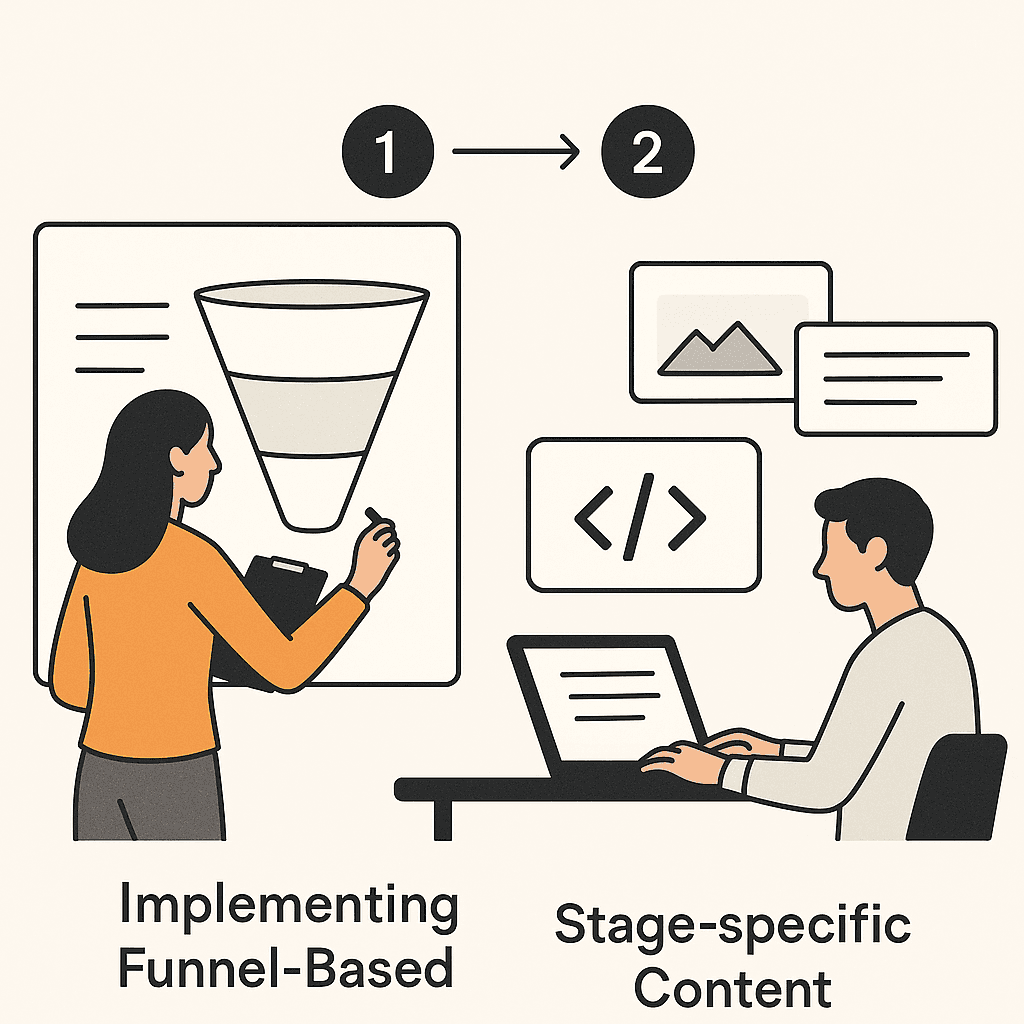
Step 1: Map Your Funnel
Identify the stages of your buying funnel:
- What defines TOFU, MOFU, and BOF for your business?
- What content exists for each stage?
- What's missing?
Step 2: Create Stage-Specific Content
Develop content for each funnel stage:
- TOFU: Educational content, resources, guides.
- MOFU: Product details, comparisons, social proof.
- BOF: Pricing, trials, guarantees, checkout.
Step 3: Set Up Detection Rules
Define how you'll identify buying stage:
- Traffic source rules. You can combine this with campaign-specific variations for different paid media campaigns.
- Behavior-based rules.
- Engagement level rules.
- Previous interaction rules.
Step 4: Create Variations
Build different website experiences for each stage:
- TOFU variation: Educational focus, soft CTAs.
- MOFU variation: Product focus, comparison content.
- BOF variation: Conversion focus, strong CTAs.
Step 5: Track Progression
Monitor how visitors move through the funnel:
- TOFU → MOFU progression.
- MOFU → BOF progression.
- Where do visitors drop off?
- What content drives progression?
Step 6: Optimize
Use data to improve:
- Which content drives funnel progression?
- Where are visitors getting stuck?
- What messaging converts best at each stage?
For ecommerce brands, remember that conversion rate optimization requires segmenting by persona. Make sure your funnel personalization accounts for different visitor types, not just buying stages.
Later-stage Funnel Personalization Strategies
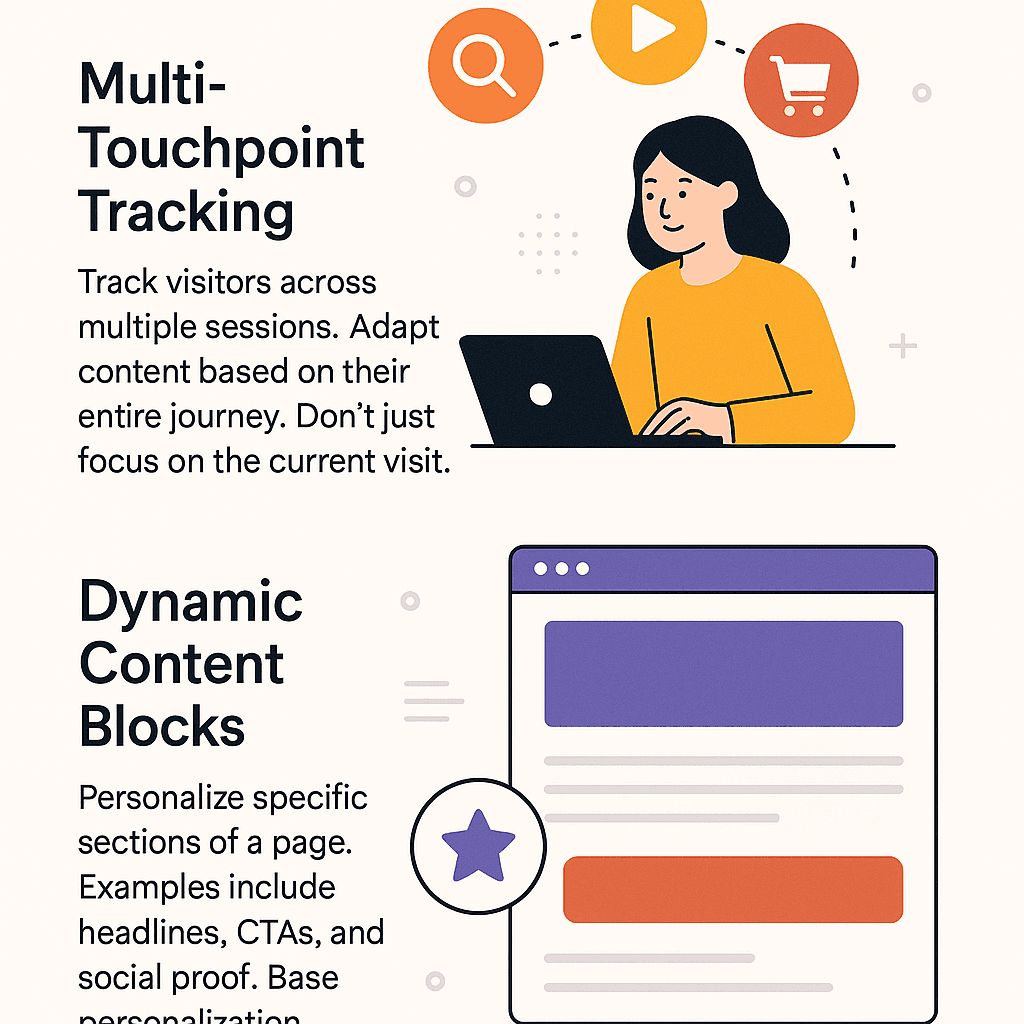
Multi-Touchpoint Tracking
Track visitors across multiple sessions. Adapt content based on their entire journey. Don't just focus on the current visit.
Dynamic Content Blocks
Personalize specific sections of a page. Examples include headlines, CTAs, and social proof. Base personalization on buying stage. Don't change the entire page.
Behavioral Triggers
Show different content based on specific behaviors:
- Viewed pricing page → Show BOF content.
- Downloaded resource → Show MOFU content.
- Spent 5+ minutes → Show more detailed content.
Retargeting Integration
Combine funnel personalization with retargeting:
- Retargeted visitors see BOF content (they've already engaged).
- First-time visitors see TOFU content.
This approach helps reduce retargeting budget waste by creating better experiences for returning visitors without additional ad spend. Learn how to edit client websites without developers to implement this quickly.
Email Integration
Connect email engagement to website personalization:
- Clicked email → Show BOF content.
- Opened but didn't click → Show MOFU content.
- No email engagement → Show TOFU content.
Measuring Funnel Personalization Success
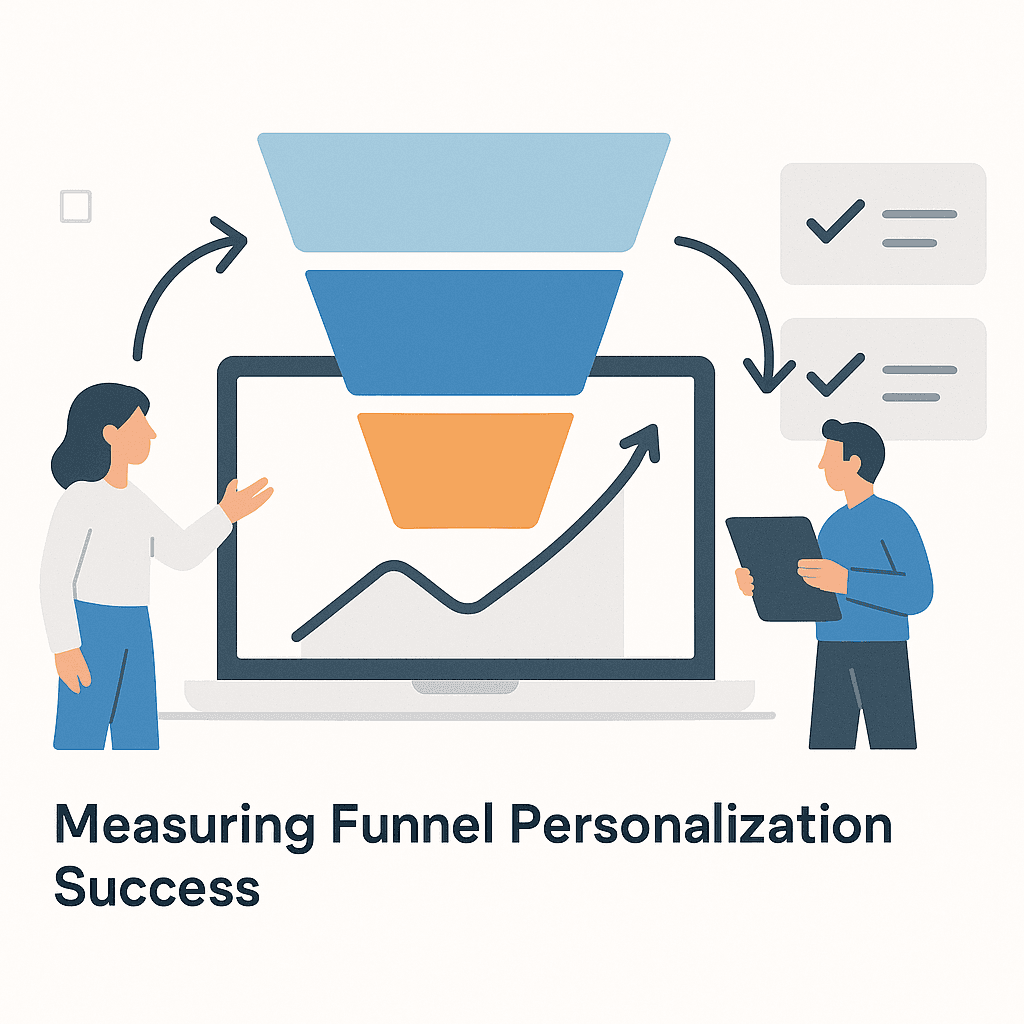
Track these metrics:
Funnel Progression
- TOFU → MOFU rate: How many awareness visitors become consideration visitors?
- MOFU → BOF rate: How many consideration visitors become decision visitors?
- BOF conversion rate: How many decision visitors actually convert?
Stage-Specific Metrics
- TOFU engagement: Time on site, pages viewed, resource downloads.
- MOFU engagement: Product page views, comparison tool usage, demo requests.
- BOF conversion: Trial signups, purchases, form completions.
Overall Impact
- Overall conversion rate: Is funnel personalization improving conversions?
- Time to convert: Are visitors converting faster?
- Revenue per visitor: Is personalization increasing average order value?
Common Funnel Personalization Mistakes
Avoid these pitfalls:
Over-Segmenting
Don't create too many funnel stages. Start with TOFU, MOFU, and BOF. Then refine.
Ignoring Mobile
Many visitors are on mobile. Ensure all funnel experiences work perfectly on mobile devices.
Not Testing
Always A/B test your funnel personalization. What you think works might not.
Forgetting the Main Site
Don't neglect your main site while focusing on personalization. Both need to work together.
Setting and Forgetting
Funnel personalization requires ongoing optimization. Review and improve regularly.
Example: SaaS Funnel Personalization
Here's how a SaaS company might implement funnel-based personalization:
| Funnel Stage | Target Visitors | Key Features |
|---|---|---|
| TOFU Experience | SEO visitors, first-time visitors |
|
| MOFU Experience | Returning visitors, product page viewers |
|
| BOF Experience | Pricing page viewers, demo requesters |
|
Potential Result: Funnel-based personalization can significantly improve overall conversion rates. The biggest gains often come from improving TOFU → MOFU progression, helping more visitors move from awareness to consideration.
Getting Started

Action Plan
- Map your funnel: Define TOFU, MOFU, and BOF for your business.
- Audit your content: Identify what content exists for each stage.
- Fill the gaps: Create missing content for each stage.
- Set up detection: Define how you'll identify buying stage.
- Create variations: Build different experiences for each stage.
- Launch and measure: Deploy and track funnel progression.
- Optimize: Improve based on data.
The Bottom Line
Funnel-based personalization adapts your website content to match each visitor's buying stage. It guides them naturally from awareness to purchase. By showing the right content at the right time, you can dramatically improve conversion rates and revenue.
Start by mapping your funnel. Create stage-specific content. Implement personalization rules. With the right approach, funnel personalization can transform how visitors experience your website and how many of them convert.
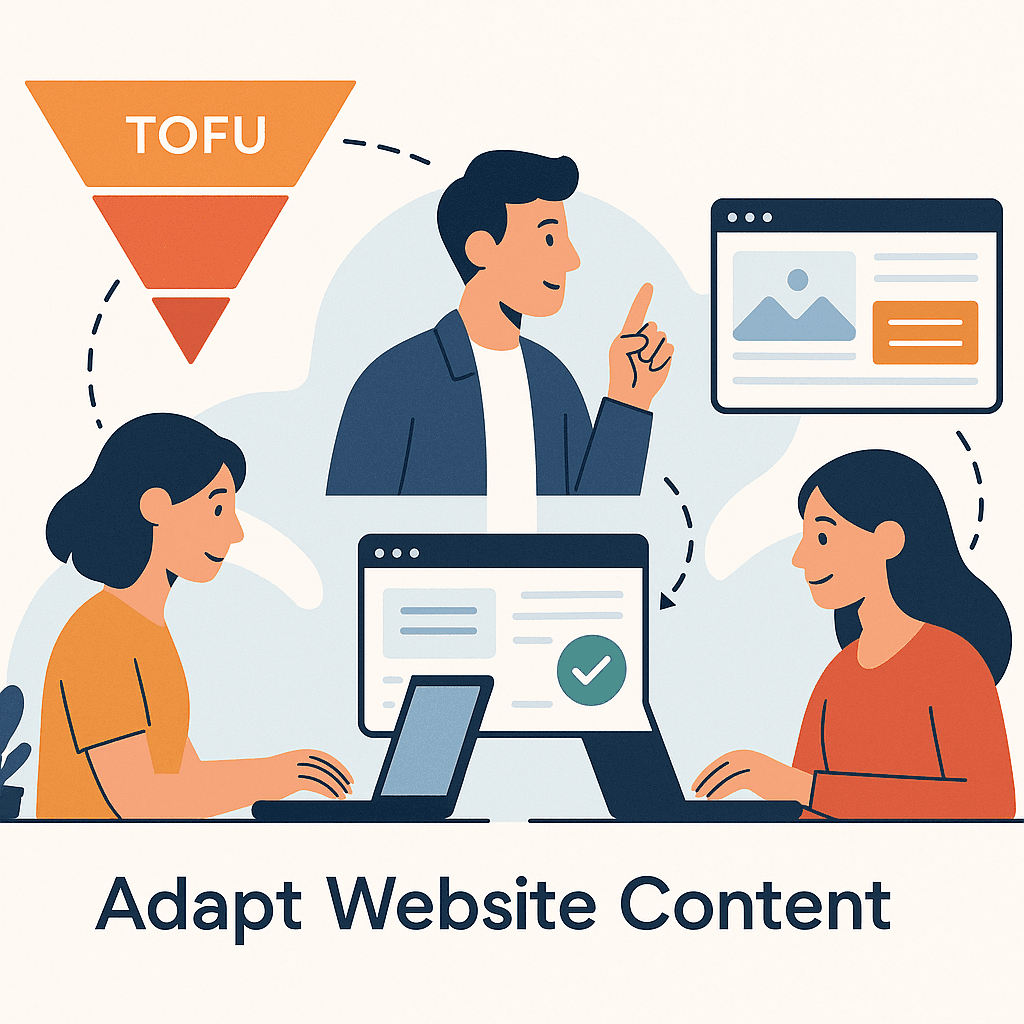
Fix Your Leaky Funnel - Convert More Traffic
Your leaky funnel is wasting ad spend and leaving conversions on the table. Funnel-based personalization guides visitors naturally from awareness to purchase, showing the right content at the right time to dramatically improve conversion rates. Stop wasting budget and deliver results that keep clients happy.