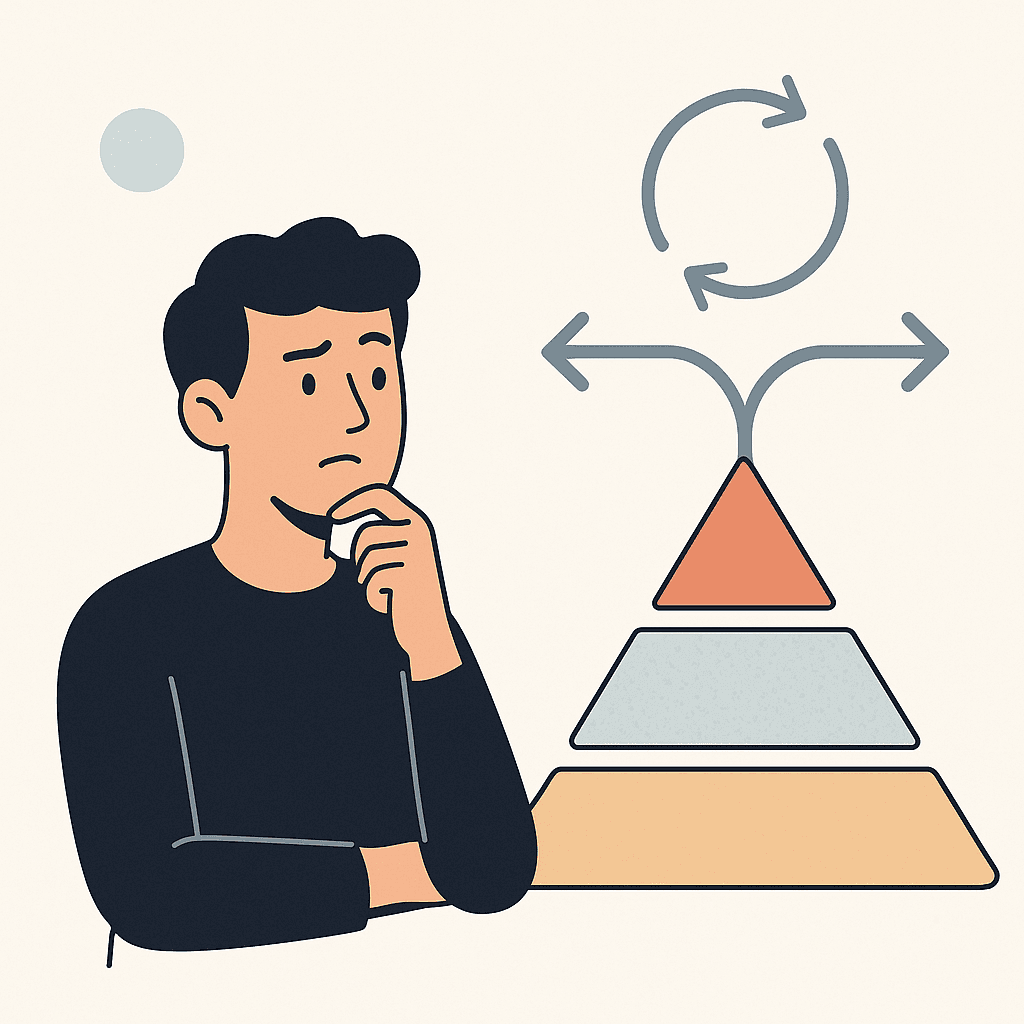
The site gets visits. The campaigns are running. But leads are near zero, and everyone wants to know what's wrong. Stakeholders demand a list of fixes. The team debates copy vs design vs offer. Every suggestion feels like a guess.
When nothing converts, the pressure to "do something" is intense. But random fixes feel productive while wasting time. Testing button colors when the page intent is wrong. Rewriting headlines when the traffic source is mismatched. Polishing a page that needs structural repair.
What to fix first when nothing converts isn't a creativity problem. It's a prioritization problem. There's an order that works, and it starts with the decision structure. This article connects to the broader framework for understanding why websites get traffic but no leads.
When Nothing Converts, Random Fixes Feel Productive (But Aren't)

Panic mode looks like this: someone changes the headline. Someone else suggests a new image. The CTA gets moved. A pop-up appears. Each change feels like progress, but nothing compounds.
This happens because teams start at the wrong level. They optimize tactics before fixing structure. They test microcopy before validating intent. They experiment with layout before understanding why visitors stall.
The right order matters. If the page's decision structure is broken, no amount of tactical polish will save it. But if the structure is sound, small improvements add up. The question isn't "what should we change?" It's "what layer of the problem are we actually solving?"
Step 1: Fix the Decision Structure
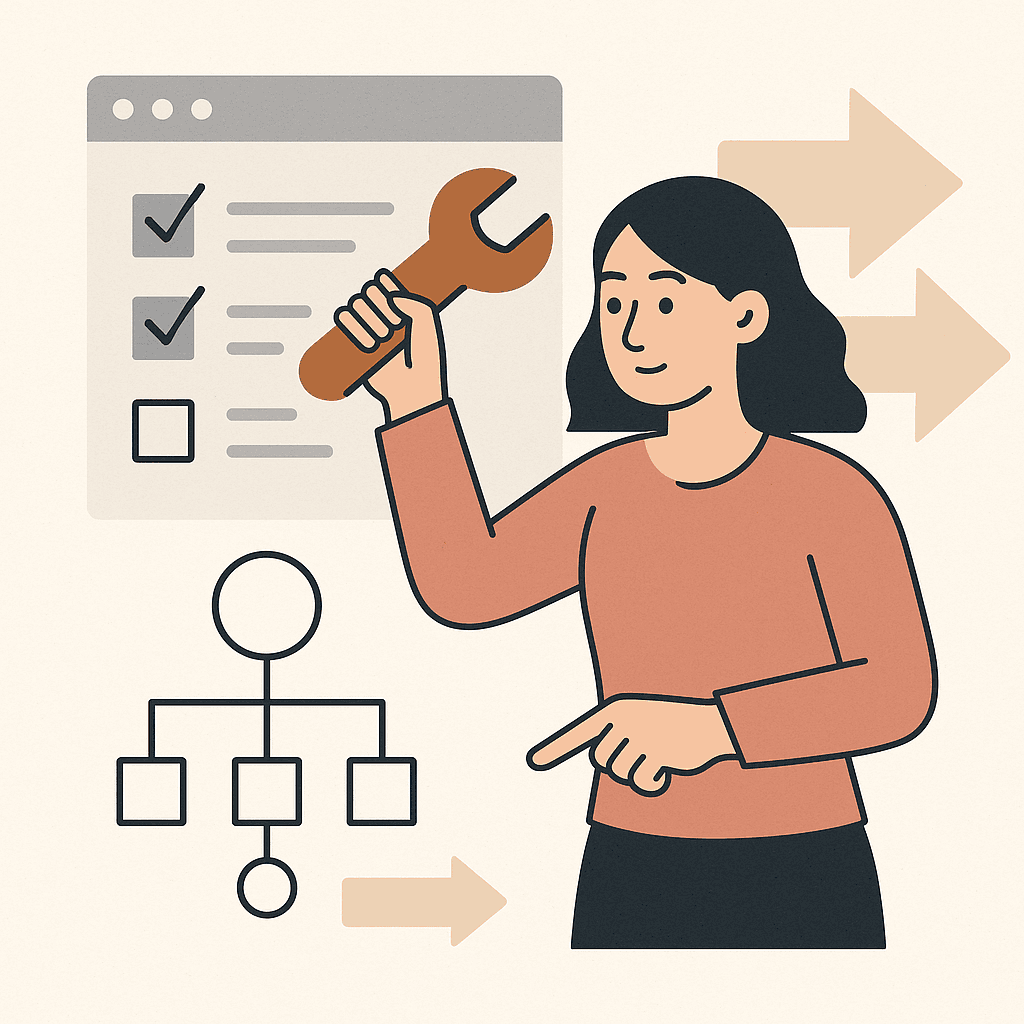
The decision structure is the foundation. It answers: what decision is this page helping the visitor make? If the answer is unclear, or if the page is trying to help with multiple decisions at once, nothing else matters yet.
Most broken pages fail here. They try to educate and sell simultaneously. They serve first-timers and returning visitors with the same content. They compare and capture at the same time. The page becomes too many things, and visitors can't orient.
Before anything else, define the page's job. One primary decision. One clear role. If the page can't pass that test, fix the structure before you test anything else.
Step 2: Fix Intent Match (Source → Page Role)
Once the page has a clear role, check whether the traffic arriving matches that role.
A page designed to capture leads will fail if it's receiving educational traffic. A page designed to educate will feel off if decision-ready visitors arrive expecting to act. The problem isn't the page. It's the routing.
Look at your top traffic sources. What intent are they bringing? Does the page's role match that intent? If not, either reroute the traffic to a better-matched page or adjust the page's role to fit the traffic. For more on how this plays out, see intent mismatch.
Step 3: Fix Trust Progression (Proof That Matches the Ask)

Once the page role is right and the traffic intent matches, visitors should be able to move through the page with growing confidence. If they stall, the issue is usually trust progression.
Proof needs to arrive in the right order. Relevance first ("is this for me?"), then credibility ("does this work?"), then fit ("will it work for me?"), then safety ("is the next step low-risk?"). When proof is scattered or missequenced, visitors get stuck.
Look at where visitors stall. Bouncing early? They need relevance proof. Reading deeply but not acting? They need fit or safety proof. Match the proof to the stall point.
Step 4: Fix Commitment Timing (Make the Next Step Smaller)

The visitor understands. They believe. They're interested. But they're not clicking. The issue is commitment timing. The ask is too big for their current stage.
This is especially common when the only CTA is the final commitment. "Book a demo." "Start your trial." "Talk to sales." Visitors who aren't ready for those steps have no path forward, so they leave.
The fix is to offer smaller steps. Something that moves the decision forward without requiring full commitment. For visitors who are ready, keep the big ask. For visitors who aren't, give them a way to progress.
Step 5: Only Then, Optimize Tactics

Once the structure is sound, the intent matches, the trust progression is clear, and the commitment timing is right, then you can optimize tactics.
Tactics are the details: headline wording, button copy, form length, visual hierarchy, page speed, mobile experience. These matter, but only when the foundation is solid. A well-optimized page with broken intent will still fail. A roughly executed page with correct intent will often work.
Think of tactics as tuning, not salvation. They improve a working system. They don't create one.
Getting Started: A 30-Minute Triage on One High-Traffic Page

Triage one page in 30 minutes
- Pick one page with traffic and no conversions. Focus on the highest-traffic underperformer.
- Define the page's decision. What decision is this page supposed to help visitors make? If you can't answer clearly, that's the first fix.
- Check intent match. What intent is arriving from the top traffic source? Does the page's role match?
- Identify missing proof. Where do visitors stall? What proof is missing for that stage?
- Check the ask. Is the CTA too big for the visitor's stage? Is there a smaller step available?
- Fix one thing at the highest broken layer. Structure first, then intent, then trust, then timing, then tactics.